Stress Testing Regenerative Agricultural Practices (STRAP)
Drought resilience in novel emerging dryland farming practices – a scientific and economic basis
Key objectives
Evaluate how regenerative cropping and pasture management practices improve drought resilience in southern Australia’s dryland farming systems.
Generate robust scientific and economic evidence through long-term on-farm research and demonstration trials.
Develop predictive models to assess the impacts of different management practices on soil health, productivity and resilience.
Share practical insights with farmers and industry to support informed decision-making and the adoption of sustainable farming practices.
About the project
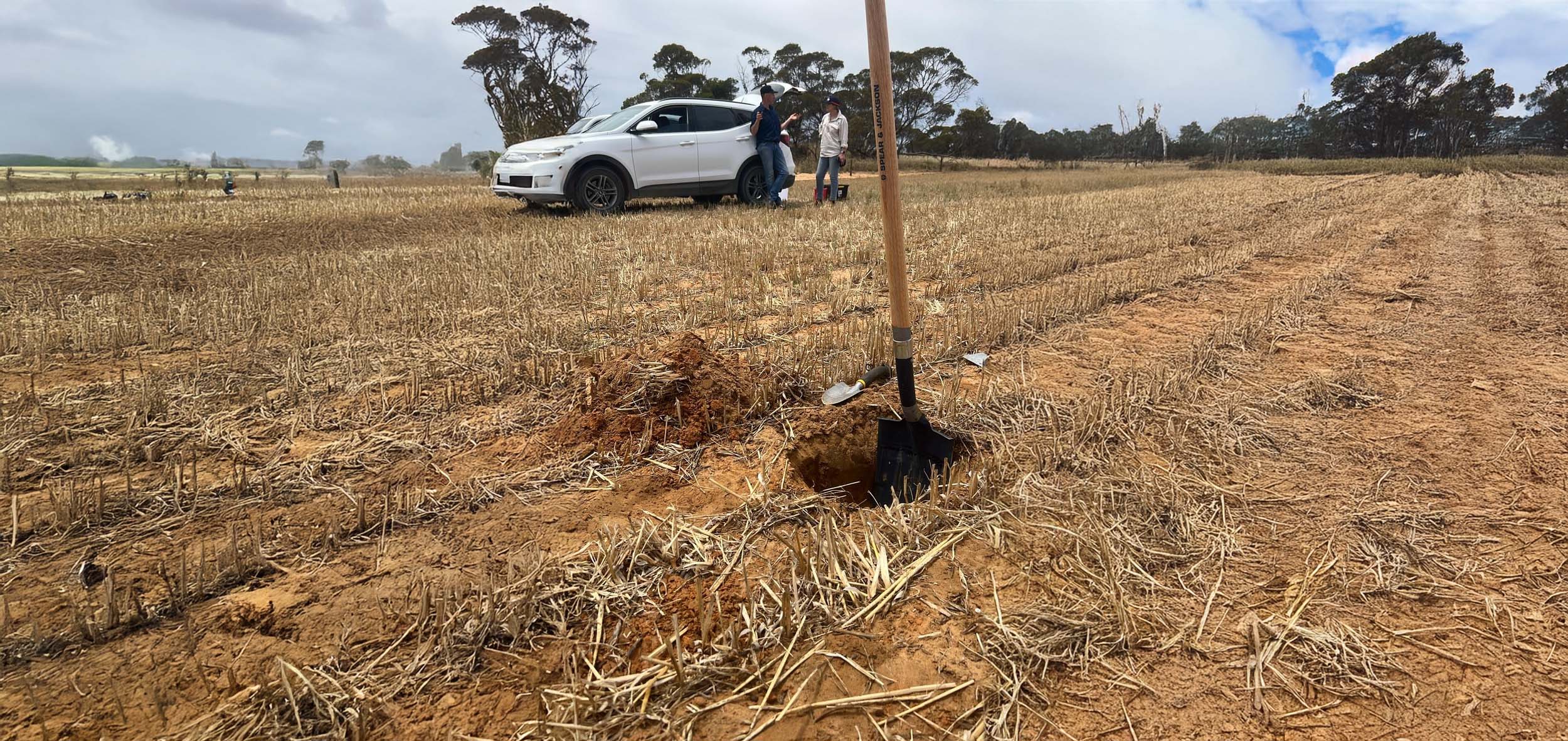
The Stress Testing Regenerative Agricultural Practices (STRAP) project is a farmer-led initiative supported by scientific expertise from CSIRO. The project investigates how regenerative farming systems perform under drought conditions across southern Australia’s diverse dryland farming regions.
Research will be conducted through five long-term field trials spanning key eco-climatic zones, complemented by four large-scale demonstration sites that showcase regenerative practices in commercial farming environments. By combining practical farming knowledge with rigorous scientific research, the project will provide valuable evidence on the environmental and economic impacts of regenerative agriculture.
A comprehensive monitoring, evaluation and communication program will ensure project findings are transparent, accessible and relevant to farmers, industry and other stakeholders.
The aim of this project
The STRAP project aims to build a strong scientific and economic foundation for regenerative agriculture by testing how different cropping and pasture management practices influence drought resilience, soil health and long-term productivity.
Using data collected from research and demonstration sites, the project will develop predictive models that allow farmers and stakeholders to explore the likely outcomes of different management scenarios. This evidence will support more informed decisions that strengthen the resilience and sustainability of dryland farming systems into the future.

Trial site locations

Year or season: Sown 5th May 2026 to 2029
Trial overview
Mallee Sustainable Farming’s Murrayville long term trial is part of the Stress Testing Regenerative Agricultural Practices (STRAP) project. On sandy loam soil near Murrayville, it will compare farming systems designed to address a practical question for Mallee growers: how can they maintain productive crops while improving the system’s ability to cope with dry and variable seasons? The trial brings together approaches based on crop and pasture diversity, legume nitrogen, longer periods of groundcover and soil amendments. By testing them side by side under local conditions over several seasons, MSF aims to build evidence about their effects on production, soil condition and farm management decisions.
Trial activities
The Murrayville treatment plan sets out six farming system approaches, alongside two continuous wheat comparisons. Planned rotations include a production-focused lentil and wheat system; vetch grown for grazing or brown manure; and intercrops such as lentil with faba bean, and canola with vetch. A groundcover treatment proposes a winter crop followed by a summer crop, of mung bean or millet. The amendment treatment compares an organic-based fertiliser strategy with traditional synthetic fertiliser management. The continuous wheat plots will compare fertiliser supplied to meet crop needs each year with a treatment fertilised in the first year and then run down. Crop performance, grain quality, biomass, soil moisture and nutrients will be assessed across the trial.
Grower value
The trial will help growers judge what each approach delivers under southern Mallee conditions and what it asks of them in return. For example, including a pasture or brown manure phase may affect income in that season while changing nitrogen supply or weed management in later crops. Intercropping and a possible summer crop raise different questions about harvest, water use and seasonal risk. Following the same treatments over time will show more than a single year’s result, including how they perform through contrasting seasons. MSF will share observations and results through site visits and other grower activities as the trial progresses.

Year or season: Sown 30th April 2026 to 2029
Trial overview
Mallee Sustainable Farming’s Balranald long term trial is part of the Stress Testing Regenerative Agricultural Practices (STRAP) project. Located near Balranald, it will test how different cropping system choices perform in a low rainfall environment. The question for local growers is whether changes to rotations, nitrogen supply, groundcover or fertiliser management can strengthen a farming system without creating costs or risks that outweigh the benefits. The trial compares approaches within the same local environment and will follow them over multiple seasons, giving growers a clearer view of both crop performance and changes in soil condition.
Trial activities
The Balranald treatment plan compares six farming system approaches and two continuous wheat treatments. Planned rotations include a production-focused lentil and cereal system; vetch for grazing or brown manure; and intercrops including lentil with field pea, and canola and vetch. The groundcover approach proposes a winter crop followed by a summer crop of pigeon pea and millet. An amendment treatment uses an organic-based fertiliser strategy for comparison with synthetic fertiliser management. In the continuous wheat plots, one treatment will receive fertiliser according to crop needs each year, while the other will receive fertiliser in the first year only. Assessments include crop biomass, grain yield and quality, soil moisture and nutrients.
Grower value
The Balranald trial will give growers local evidence to weigh the benefits, costs and practical challenges of changing their rotations or input strategies in the northern Mallee. It will help show how pasture phases, intercrops, brown manure and longer groundcover periods affect the crops that follow. Keeping these comparisons in place across seasons is particularly useful where rainfall and growing conditions vary widely from year to year. MSF will share emerging observations and results through grower visits and other project activities, enabling farmer discussion of approaches that may work in their own systems.

Podcasts
Guides
Acknowledgements

Working together with farmers
Other MSF Projects